


Why Every Construction Lender Needs a Pre-Construction Review (PCR)
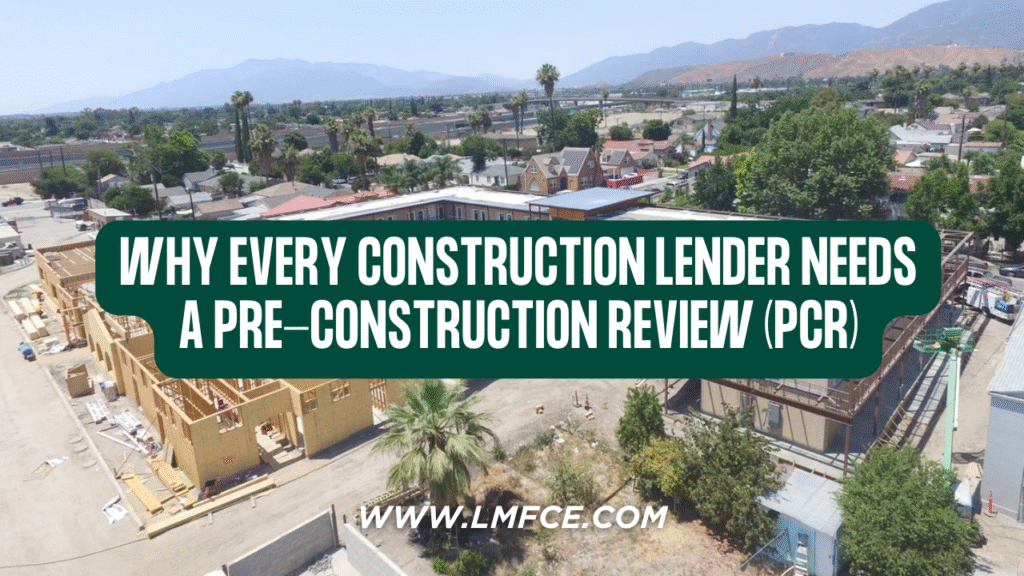
What if I told you that there’s a simple, inexpensive tool that could save your construction lending business from catastrophic losses—yet most lenders still aren’t using it?
Marcus Carter from La Mesa Fund Control and Escrow calls it “really cheap insurance,” and he’s absolutely right. The Pre-Construction Review (PCR) has quietly become the industry’s best-kept secret for identifying million-dollar problems before they destroy your bottom line.
If you’re funding construction loans without ordering PCRs, you’re essentially gambling with your institution’s future. Here’s why every construction lender needs to make PCRs a non-negotiable part of their underwriting process.
What Exactly Is a Pre-Construction Review (PCR)?
A Pre-Construction Review is a comprehensive analysis that provides a deep dive into both the construction budget and the entire project before you commit a single dollar. Think of it as a financial and technical autopsy—except you’re examining the project while there’s still time to save it.

The PCR process evaluates three critical components that determine whether your construction loan will succeed or fail:
Constructibility Analysis: Can this project actually be built as designed? Are there technical challenges that could derail construction?
Cost Verification: Are the budget numbers realistic, or are you looking at a financial disaster waiting to happen?
Contractor Competence: Does the contractor have the expertise, financial stability, and track record to deliver on their promises?
Unlike property condition assessments or environmental reviews, PCRs aren’t regulated by standardized protocols. This makes choosing the right provider absolutely crucial—because when things go wrong, there’s no safety net.
The Hidden Dangers of Skipping Pre-Construction Reviews
Construction lending is inherently risky business. Projects face constant threats from cost overruns, design flaws, contractor failures, and market volatility. Without a PCR, you’re flying blind into a financial minefield.
Budget Disasters Lurking in Plain Sight
Many construction budgets look reasonable on paper but contain fatal flaws that only become apparent during construction. Common budget problems include:
- Missing cost categories that can add 15-30% to total project costs
- Unrealistic material pricing that doesn’t account for market volatility
- Labor costs that don’t reflect current market rates or union requirements
- Inadequate contingency funds for unforeseen complications
The Contractor Competence Crisis
Even experienced contractors can be the wrong fit for specific projects. A PCR examines whether your borrower’s chosen contractor has:
- Relevant experience with similar project types and scales
- Financial stability to weather project challenges
- Proper licensing and insurance coverage
- A track record of completing projects on time and within budget

Design and Engineering Red Flags
Architectural plans might look impressive, but are they actually buildable? PCRs identify constructibility issues such as:
- Structural designs that don’t comply with local building codes
- MEP systems that conflict with architectural elements
- Site conditions that weren’t properly considered during design
- Permit challenges that could delay project start dates
Real-World Benefits: Why PCRs Deliver Measurable ROI
The financial impact of PCRs extends far beyond their modest cost. Lenders who consistently use pre-construction reviews report:
Dramatically Reduced Default Rates
By identifying problems before construction begins, PCRs help prevent the cost overruns and delays that lead to loan defaults. Projects with completed PCRs show significantly lower default rates compared to loans funded without this crucial review.
Stronger Borrower Relationships
When you require a PCR, you demonstrate sophisticated underwriting practices that protect both you and your borrower. This builds confidence and often leads to larger, more profitable lending relationships.
Enhanced Risk Management Documentation
PCRs provide detailed documentation that supports your underwriting decisions. This proves invaluable during regulatory examinations and helps demonstrate prudent lending practices to stakeholders.

Faster Problem Resolution
When issues do arise during construction, having a PCR in your files provides a roadmap for understanding what went wrong and how to fix it. This accelerates problem resolution and minimizes financial losses.
Industry Best Practices: The PCR Standard
Leading construction lenders have made PCRs a standard part of their underwriting process, not an optional add-on. Here’s why this approach makes business sense:
Risk Mitigation at Scale
For lenders handling multiple construction loans, PCRs provide consistent risk evaluation across all projects. This standardized approach helps identify portfolio-wide trends and potential problems.
Competitive Advantage
Lenders who use PCRs can confidently pursue larger, more complex projects that competitors might avoid. This expanded lending capacity translates directly into increased revenue opportunities.
Regulatory Compliance Support
While not required by regulation, PCRs demonstrate sophisticated risk management practices that regulatory agencies view favorably during examinations.
The PCR Process: What to Expect
A comprehensive PCR typically includes:
Document Review: Detailed analysis of construction contracts, budgets, schedules, and architectural plans.
Site Analysis: Evaluation of site conditions, permit status, and potential construction challenges.
Market Assessment: Review of local material and labor costs to verify budget assumptions.
Contractor Evaluation: Analysis of the contractor’s financial stability, experience, and capability to complete the project successfully.

Risk Assessment: Identification of potential problems and recommended mitigation strategies.
The entire process typically takes 7-14 days and costs a fraction of what you’d lose on a single problem loan.
Making PCRs Work for Your Institution
Implementing PCRs doesn’t require overhauling your entire underwriting process. Start by:
Requiring PCRs on All Loans Above a Certain Threshold: Many lenders start with loans over $1 million and gradually expand the requirement.
Choosing the Right Provider: Look for firms with deep construction expertise, not just financial analysis capabilities.
Training Your Team: Ensure your lending staff understands how to interpret and act on PCR findings.
Building PCR Costs into Loan Pricing: The modest cost of a PCR should be factored into your loan pricing structure.
Don’t Gamble with Your Institution’s Future
Marcus Carter’s advice is simple but powerful: if you’re doing construction loans without PCRs, you need to start immediately. The cost of a pre-construction review pales in comparison to the potential losses from a single problem loan.

Every day you delay implementing PCRs is another day you’re exposing your institution to unnecessary risk. The construction lending landscape is too competitive and too risky to operate without this crucial tool.
Ready to Protect Your Construction Lending Portfolio?
La Mesa Fund Control and Escrow has been helping lenders minimize construction loan risk through comprehensive PCRs and fund control services. Our experienced team understands the complexities of construction lending and provides the detailed analysis you need to make confident lending decisions.
Don’t let another construction loan close without the protection of a pre-construction review. Contact La Mesa Fund Control and Escrow today to discuss how PCRs can strengthen your construction lending program and protect your institution’s future.
The question isn’t whether you can afford to order PCRs—it’s whether you can afford not to. Make the call today and start protecting your construction lending portfolio with the industry’s most effective risk management tool.
